
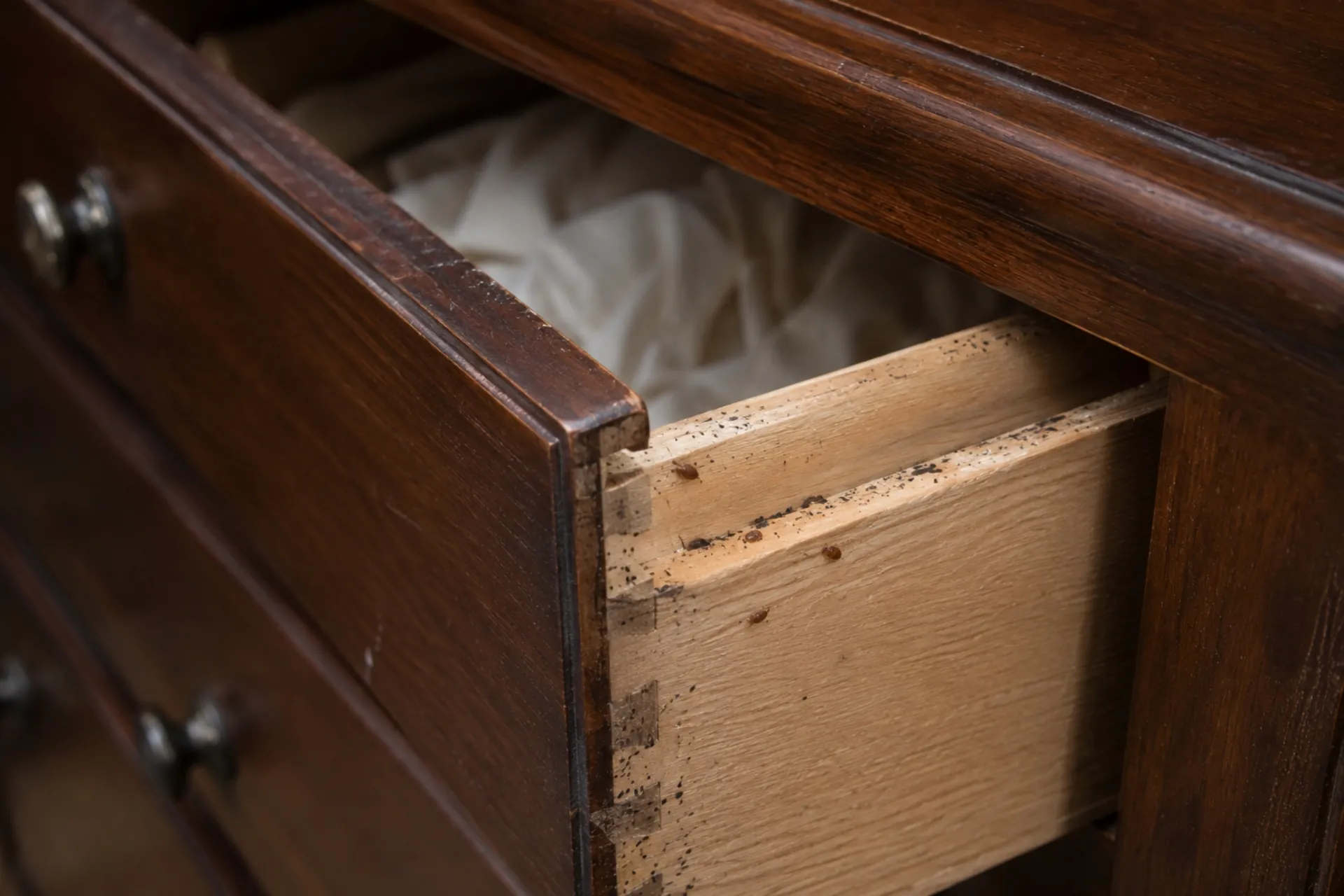
Before loading that used couch or dresser, check the seams, joints, screw holes, and hidden spaces where bed bugs can hitch a ride home.
Used furniture can be affordable, well made, and full of character, but any item that has spent time in an infested room can carry bed bugs. Bed bugs can hide in a spotless-looking chair or bed frame, even in a clean, well-maintained home. Before bringing a purchase into a Charlottesville home, inspect it in a well-lit area. If evidence is found after the item comes inside, Charlottesville bed bug treatment should begin with identification and an assessment of every place the furniture has been.
Know Which Pieces Carry Greater Risk
Bed bugs tend to stay near people who are sleeping or resting. Mattresses, box springs, upholstered headboards, sleeper sofas, recliners, and nightstands therefore deserve the closest scrutiny. Items with deep seams, hollow frames, layered fabric, loose upholstery, or inaccessible internal spaces are difficult to inspect thoroughly.
Hard furniture is not automatically safe. Bed bugs can hide in screw holes, drawer joints, cracks, felt pads, and the underside of tables or dressers. A piece stored in a bedroom may carry insects even if no fabric is present.
Inspect Before Loading the Item
Ask the seller to place the furniture where natural light or a strong flashlight can reach every side. Bring a flashlight, a thin card for checking seams, disposable gloves, and clear tape or a small sealed container for a possible specimen.
Move slowly through the inspection:
Examine seams, piping, tufts, folds, and zipper areas.
Turn the piece over and inspect dust covers, staples, legs, and frame joints.
Remove drawers and look at corners, tracks, screw holes, and unfinished wood.
Check for live bugs, pale eggs, shed skins, or groups of dark spotting.
Look for cracks or enclosed areas that cannot be inspected without dismantling the item.
Dark marks can come from many sources, and one stain does not confirm bed bugs. A live specimen or a combination of characteristic signs provides stronger evidence. If anything is suspicious, leave the furniture where it is rather than trying to solve the problem after purchase.
Ask Useful Questions, but Verify for Yourself
Ask where the furniture was used and stored, whether the home has had recent pest treatment, and whether the item came from an apartment, storage unit, or curb. Honest answers may help evaluate risk, but a seller may be unaware of an infestation. Bed bugs can be present even when nobody reports bites because some people have little or no skin reaction.
Curbside furniture has an unknown history and may have been discarded because of pests. Avoid taking upholstered pieces from trash areas, apartment dumpsters, or move-out piles. The potential cost and disruption of introducing bed bugs can outweigh the value of a free item.
Create a Buffer Before the Furniture Enters the Home
When practical, inspect the item again in a garage or another contained area with a hard floor. Do not place it temporarily in a bedroom or living room. Vacuuming visible surfaces may remove some insects, but it cannot reach every hiding place and should not be treated as proof that the item is clear. Empty the vacuum immediately into a sealed bag outdoors according to the vacuum manufacturer’s instructions.
Avoid applying consumer pesticides, rubbing alcohol, or improvised heat. Products may be unsafe for furniture surfaces or indoor use, and home heating attempts can create a fire hazard while leaving cool hiding spots untouched. If a valuable item has suspicious signs, professional guidance can determine whether inspection or treatment is practical.
Monitor After Bringing a Piece Inside
Even a careful inspection can miss a small number of bugs or eggs. Keep the furniture away from sleeping areas until it has been examined, reduce clutter around it, and pay attention to seams and nearby baseboards during the following weeks. If a bug appears, capture it and avoid moving the piece through the house.
Used furniture does not have to be avoided completely, but it should never enter the home unchecked. Virginia Bed Bug Experts can help identify suspicious evidence and determine whether the furniture or surrounding rooms require treatment. Charlottesville residents who discover signs after a purchase can contact Virginia Bed Bug Experts for a focused plan before the item is discarded, relocated, or treated with an unsuitable product.
Need a local specialist?
Get a confidential, no-obligation quote today.