
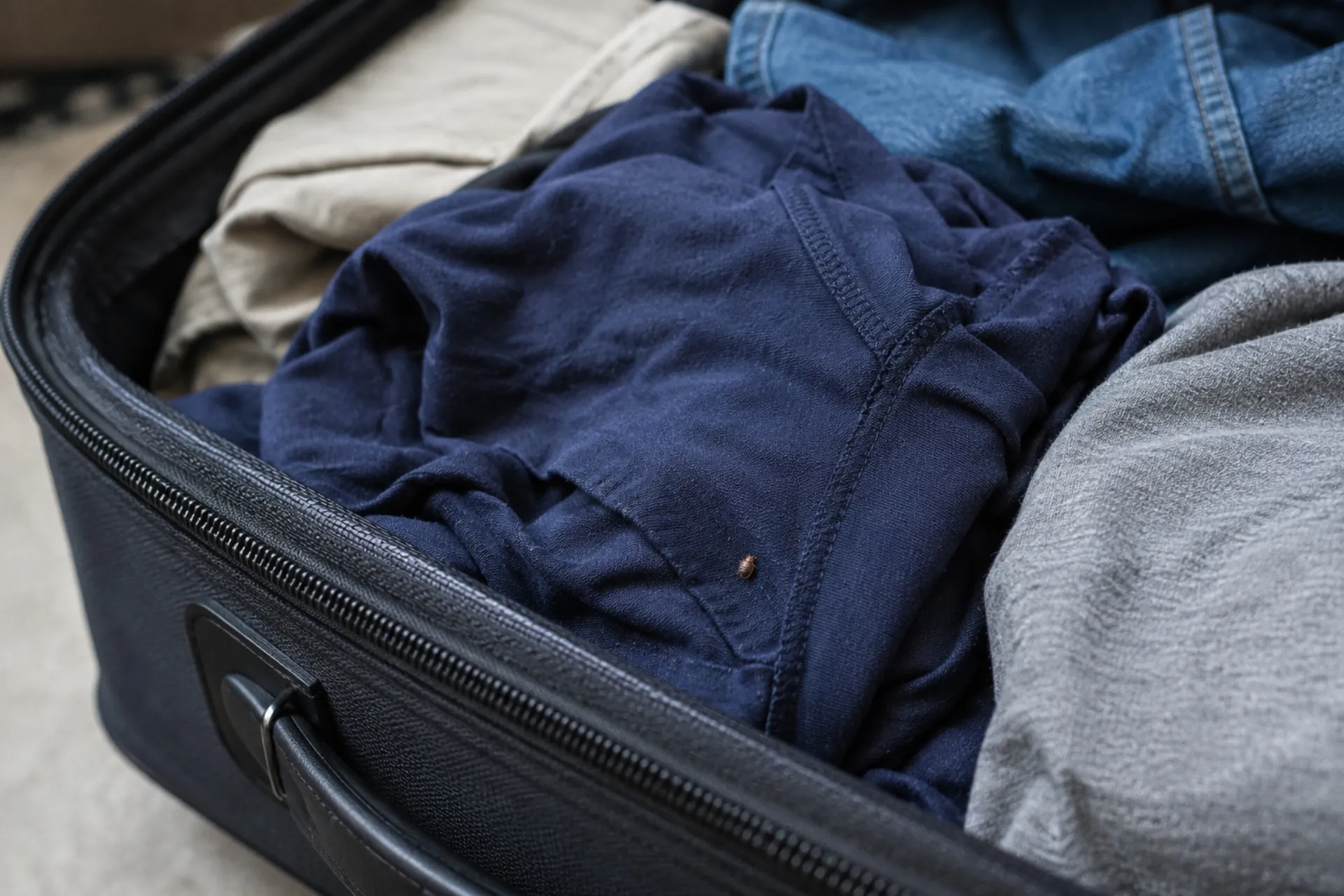
Spot a bed bug after a Charlottesville hotel stay? See what to do with luggage, clothing, and exposed areas before unpacking at home.
Finding a suspected bed bug after a Charlottesville hotel stay can be alarming, but a careful response can limit the chance of carrying insects deeper into the home. The first priorities are to contain luggage, preserve the specimen, and inspect belongings before putting them away. If evidence appears at home, Charlottesville bed bug treatment options can be evaluated after the insect is identified and the affected areas are assessed.
Preserve the Bug and Record What Happened
If possible, capture the insect with clear tape or place it in a sealed container. Take close photographs in good light. Bed bugs can be confused with carpet beetles, bat bugs, small cockroach nymphs, and other insects, so identification should come before treatment.
Make note of where the insect was found and when the hotel stay occurred. If it was on luggage after arriving home, note which rooms the luggage entered and where it was placed. This simple timeline helps focus an inspection. A bug found in a hotel room does not automatically mean it reached the traveler’s home, and a bug noticed at home cannot establish its source by itself.
Isolate Luggage Without Spreading Items
Do not carry the suitcase from room to room while deciding what to do. Move it to a contained, easy-to-inspect location if that can be done without dragging it through the home. A garage, hard-surface entry area, or bathtub may be useful depending on the property, but extreme heat or cold in a vehicle should not be treated as a reliable control method.
Unpack methodically. Clothing and washable fabrics should go directly into sealed bags until they can be handled. Avoid shaking items because that can dislodge insects. Examine suitcase seams, zipper folds, pockets, wheels, handles, and the lining. Toiletry bags, shoes, books, electronics cases, and travel pillows also have folds and gaps that deserve attention.
Use the Dryer Correctly for Suitable Items
For clothing and other dryer-safe fabrics, heat from a clothes dryer can be useful. Place items directly into the dryer and use a heat setting appropriate for the materials. Bulky loads may not heat evenly, so avoid overfilling the drum. Afterward, place processed items in clean sealed bags or containers instead of returning them to the uninspected suitcase.
Items that could be damaged by heat should remain contained until they can be inspected or addressed as part of a professional plan. Do not spray luggage, clothing, or electronics with pesticides unless the product label specifically permits that use. Rubbing alcohol, foggers, and improvised heating methods can create fire, exposure, or property-damage risks without reaching every hiding place.
Inspect the Places Luggage Touched
Focus first on the bed, upholstered furniture, closet floor, and other locations where the suitcase rested. Use a flashlight to check seams, joints, baseboard edges, and nearby cracks. Continue monitoring rather than tearing the home apart after one uncertain sign.
Watch for live bugs, shed skins, eggs, or clustered dark spotting. Bites alone are unreliable evidence. Some people do not react, reactions can be delayed, and many other conditions resemble bed bug bites. If another suspicious bug appears, preserve it as well.
Avoid Moving to a Different Sleeping Area
Continue sleeping in the usual room unless a professional gives different instructions. Moving to a couch or guest room may draw bed bugs toward a new sleeping location and expand the area that requires inspection or treatment. Keep blankets off the floor, reduce clutter near the bed, and avoid moving furniture or possessions to another household.
If the hotel is notified, provide the room number, dates of the stay, photographs, and a factual description of what was found. The hotel can investigate its room, but its response does not determine whether the insect at home is a bed bug or whether an infestation exists. Keep the focus on the evidence in the house. Credit-card receipts, reservation details, and photographs may be useful records, but they should not delay inspection of exposed belongings.
When physical evidence is found, early identification allows the response to stay focused. Virginia Bed Bug Experts can evaluate whether heat, Aprehend®, or a hybrid approach fits the home and the evidence present. To discuss a suspected travel-related introduction or schedule professional help, reach out to Virginia Bed Bug Experts before unpacked belongings circulate throughout the house.
Need a local specialist?
Get a confidential, no-obligation quote today.